
When South Africans search “roofing materials” online, they discover a dizzying menu of metal sheets, fibre-cement slats, concrete tiles, clay classics and even thatch bundles. Which option truly fits your budget, climate and design brief? Below we unpack the front-runners on local sites and building yards, comparing how they look, how they last and how much they lighten—or load—your wallet.
1. Corrugated & IBR/Chromadek® Steel Sheeting
Why it’s popular
Galvanised or alu-zinc steel sheets (corrugated, IBR or Chromadek®) tick three big boxes: light weight, rapid coverage and rock-solid durability. Properly coated sheets shrug off rust and wind uplift, and the distinctive ribs shed Highveld downpours with ease making it amongst the most popular roofing materials.
Performance
- Strength-to-weight: Steel has the highest ratio of any common roof covering, so spans need less framing.
- Weather resistance: modern factory coatings last 20-30 years before repainting.
- Energy: light colours reflect solar gain; Chromadek® “Energylite” adds a heat-reflective backer for cooler interiors.
Aesthetics
Industrial chic for barn-style homes or bold contemporary boxes. Colour-fast paint finishes widen the palette beyond zinc-grey.
Cost
IBR or corrugated sheets start at ± R100–R420 per sheet (0,4–0,6 mm gauges); colour-coated Chromadek® rises to R505–R1 020.
Drawbacks
Higher noise in hailstorms and possible denting if thin gauges are used. Good acoustic insulation is a must.
2. Fibre-Cement Sheets & Slats
Fibre-cement earned cult status thanks to Big Six and Profile B roof sheets—rigid boards reinforced with cellulose and cement.
Performance
- Rot-proof, non-combustible and immune to termites.
- Wide corrugations span further than metal of the same thickness, ideal for farm sheds and coastal homes.
Aesthetics
From rugged Big Six to Canadian-pattern sheets and charcoal fibre-cement slates that mimic natural slate without the mass.
Cost
Priced between metal sheets and concrete tiles; you’ll pay in the mid-R200s /m² for sheeted roofs, slates ± R100 per tile in retail outlets.
Drawbacks
Heavier than steel and needs careful flashing detailing to avoid leaks on low pitches.
3. Concrete Roof Tiles
SA’s volume-builder favourite roofing materials. Modern moulds produce interlocking Double Roman or Ludlow profiles in baked-through colours. Premium tiles retail from R15.66–R19.64 each (≈ R170-R210 /m² laid).
Performance
- Service life of 40-50 years when fixed to SANS 10062.
- Excellent thermal mass—keeps midday heat outside.
- Easy individual replacement if cracked.
Aesthetics
Earth-toned terracotta, charcoal and slate greys suit Tuscan or modern mono-pitch designs. Textured surfaces hide scuffs.
Drawbacks
Weight tops 45 kg/m², demanding robust trusses, and porous concrete needs quality underlay in driving rain.
4. Clay Tiles
The original “heritage” roofing material. High-temperature firing locks colour into the body (no repainting). Clay Double Roman, Taunus or French profiles give perfect curves and deep shadows.
Performance
- Natural UV stability and salt-spray resistance—prime for coastal estates.
- Life expectancy often exceeds 70 years.
Aesthetics
Rich terracotta, muted slate or glazed greens amplify Cape Dutch, Mediterranean or country-lodge styles.
Cost
Expect ± R25-R30 per tile (≈ R260-R320 /m²), plus beefier trusses to carry ± 50 kg/m² dead load.
Drawbacks
Higher upfront cost and weight, plus tiles can shatter under careless foot traffic.
5. Natural & Engineered Slate
Genuine slate or high-density fibre-cement slate offers unrivalled prestige. Nutec slates retail at ± R102–R110 each.
Performance
- Life span reaches a century for quarried slate.
- Zero combustibility—an advantage in thatch-fire buffer zones.
Aesthetics
Thin, flat modules lay in crisp courses; dark graphite tones suit minimalist architecture.
Drawbacks
The heaviest mainstream covering (up to 65 kg/m²) and requires specialist fixers. Natural slate costs 2-3 × concrete tile rates.
6. Thatch
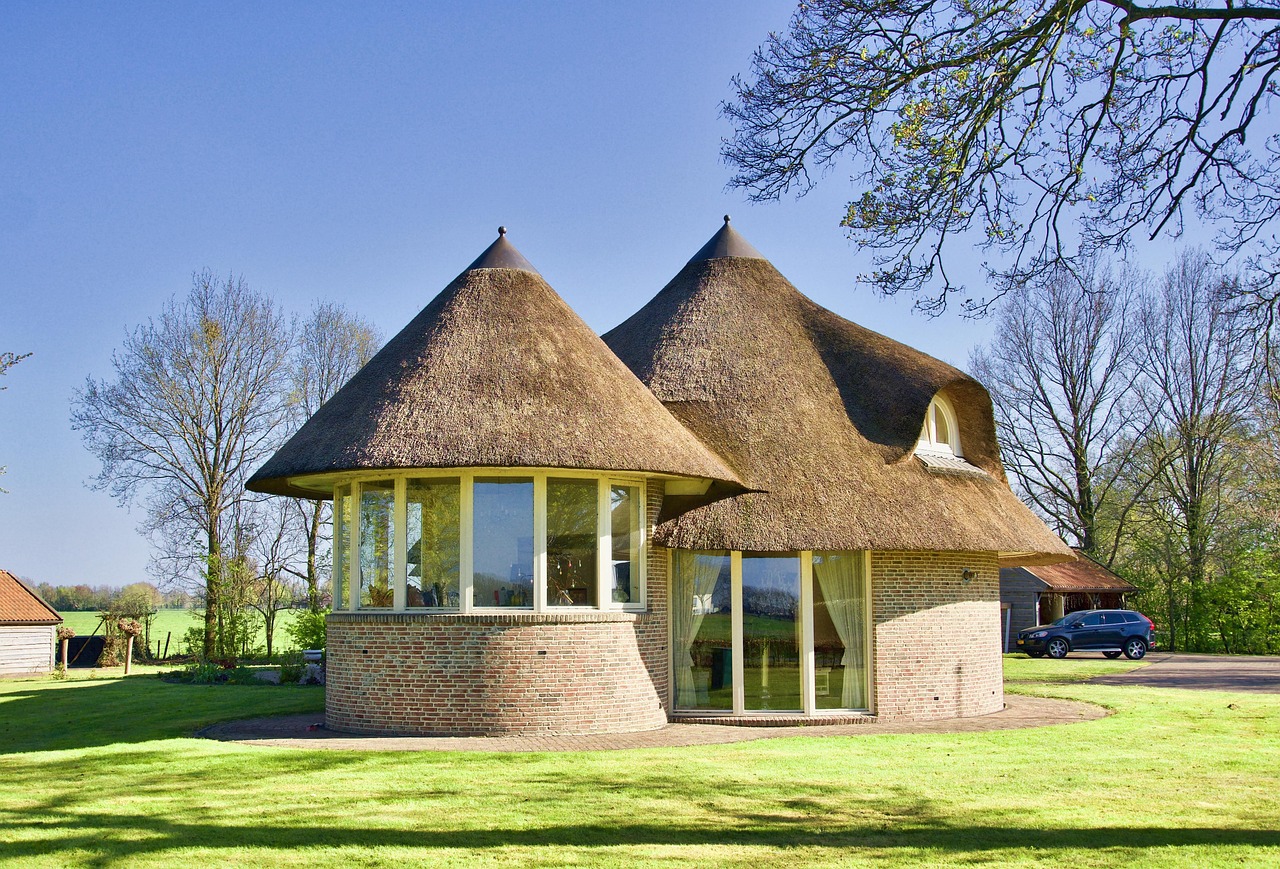
Not just for game lodges: thatch roofs of combed grass or reed remain common in rural SA as one of the most iconic roofing materials.
Performance
- Outstanding insulation; cool in summer, cosy in winter.
- A well-maintained ridge lasts 12-15 years, the main coat up to 50 years.
Aesthetics
Organic curves blend into bushveld settings and add instant character.
Cost & Drawbacks
Labour-intensive to install (and insure) and carries a higher fire-risk without sprinklers or fire retardants. Regular re-thatching adds life-cycle cost.
7. Polycarbonate Sheeting (for skylights & patios)
Clear or tinted polycarbonate IBR sheets slot between metal rows to create day-lighting. They’re UV-stabilised, hail-resistant and weigh a fraction of glass. Perfect for verandas and carports, though prone to scratching and thermal expansion gaps if fixings aren’t oversize.
Conclusion
Selecting the right roofing materials is a three-way trade-off between performance, aesthetics and cost. Steel sheeting races ahead on speed and affordability; fibre-cement finds the “sweet spot” for balance; tiles and slate deliver timeless beauty; thatch provides ecological charm. Weigh local climate, structural limits and design vision carefully—then chat to Dezzo Roofing’s technical team for engineering-backed advice and a no-obligation quote that keeps your project watertight for decades to come.
FAQs
What materials are needed for roofing?
At minimum you’ll order a structural deck (trusses or rafters) plus a covering such as metal sheets, fibre-cement, tiles or thatch, together with underlay, flashings, fasteners and rain-water goods.
Which roofing material is cheaper?
In most hardware yards galvanised corrugated or IBR sheet is the price leader, starting near R100 per sheet, whereas concrete or clay tiles and slate cost progressively more per square metre.
How much is one roofing sheet?
Current retail pricing for IBR or corrugated steel ranges R100 – R420 per sheet depending on thickness and coating; Chromadek® colour coils increase the tag to ± R505-R1 020.
What is the newest material for roofing?
Engineered fibre-cement slates and solar-ready metal panels are the latest arrivals—offering lightweight durability with integrated PV laminate options now appearing in South African catalogues.